

When we enter a trade, as mentioned before, we don’t set a fixed TP, but instead, we look at the trend structure. When the price is moving either up or down, it’s forming a trend. That’s why we say the price is trending.
Let’s say that we took a trade short, we see the price trending down. It’s making lower lows and lower highs. Why would we set a fixed TP when the bears are clearly in control?
We wouldn’t and we don’t.
We only exit the trade if we see the price rejecting an area through candlestick price action, or if the price forms a higher high in a downtrend which would show that the bulls are stepping in.
The same rules apply for long trades except in reverse.
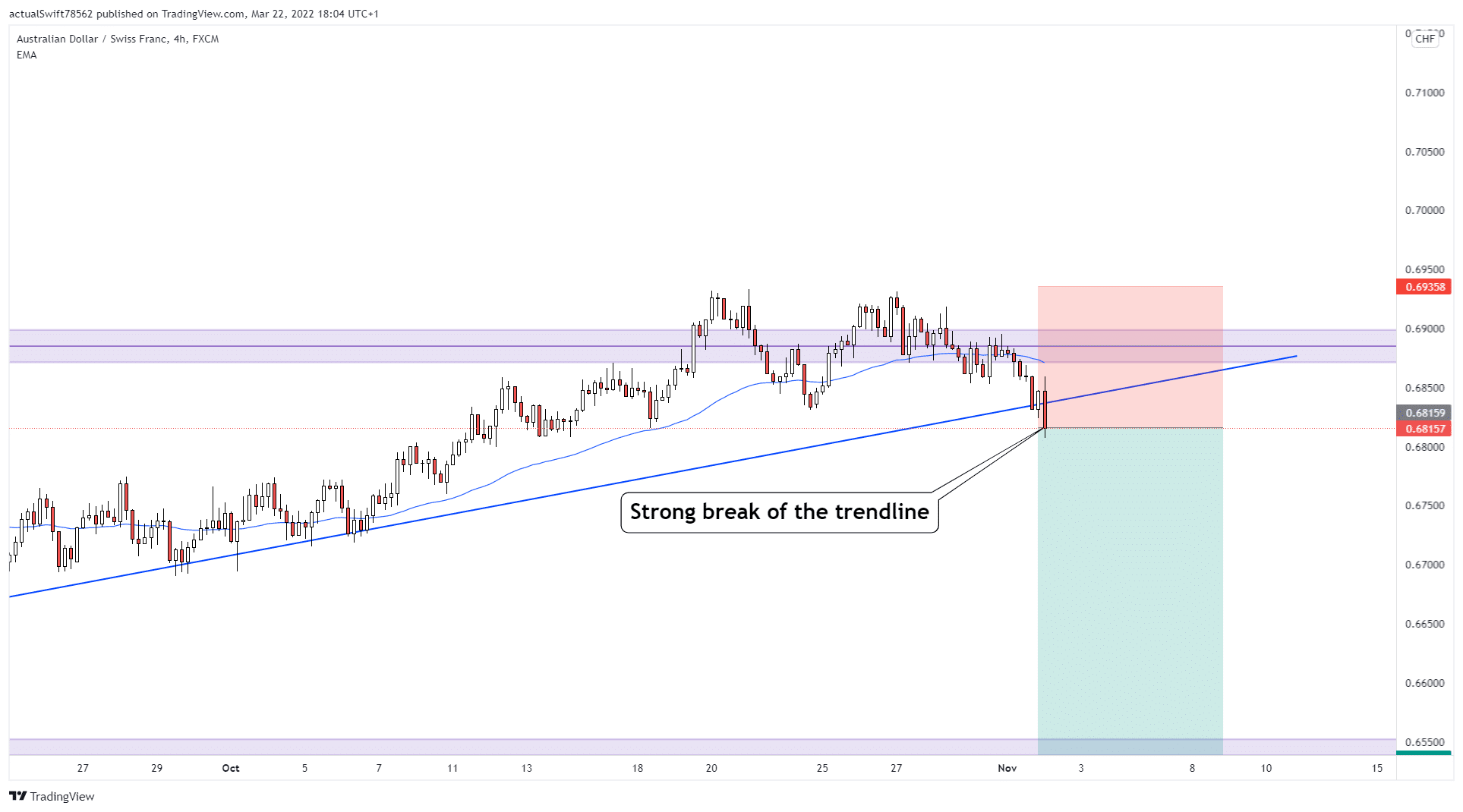
We will use the same AUD/CHF setup for our example:
We got our strong break of the trendline, so we entered a trade.
The price made its way all the way down to the support area, where we saw the price react to it with a giant engulfing candle, so we closed the trade, because that met our trade exit criteria.
Altho we closed this trade at the S/R area, we didn’t have a fixed TP there, we only closed it after we saw that the price actually started rejecting the area.
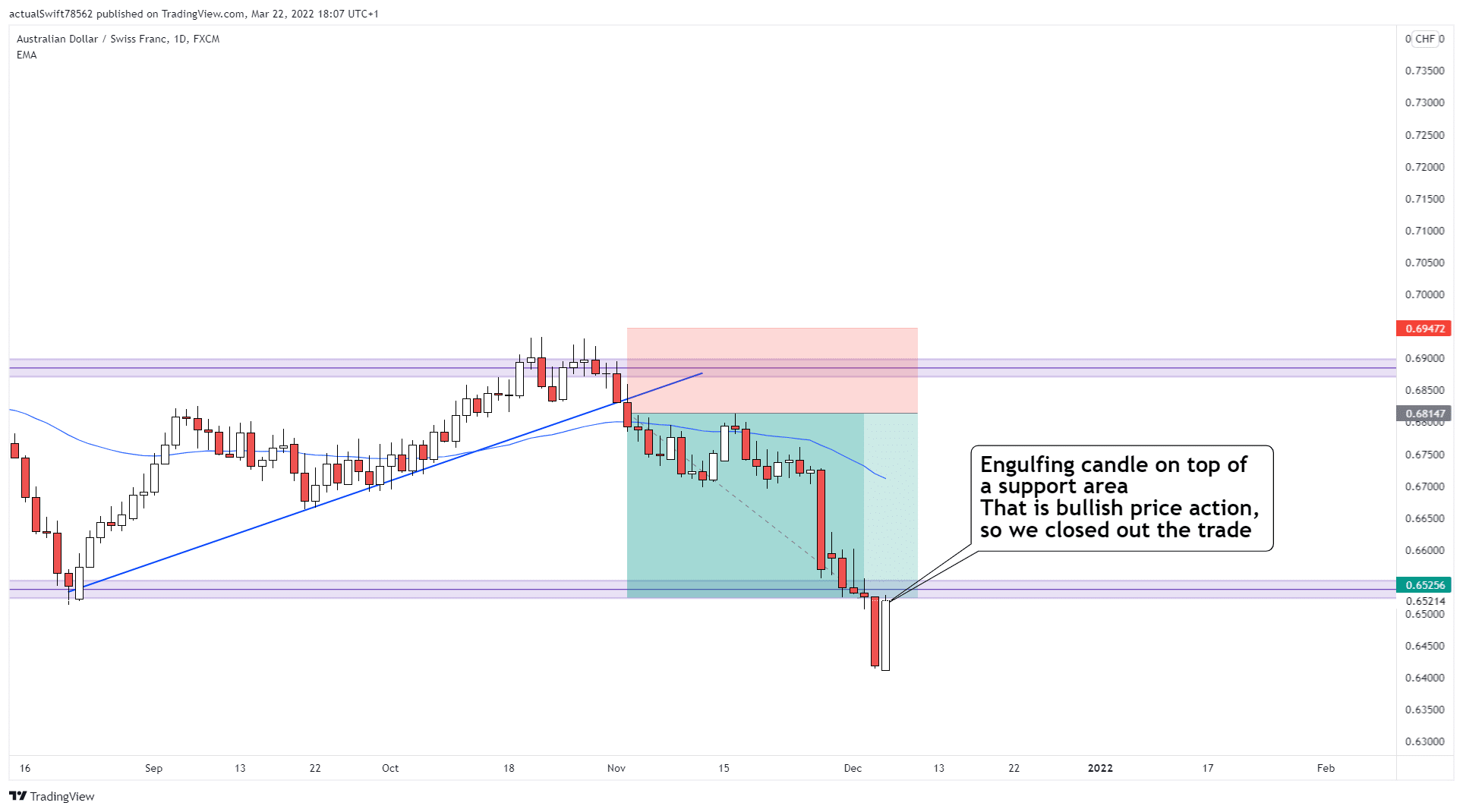
Remember, we entered this trade on the 4h timeframe and if we look at the 4h chart, the move down that we caught is giant compared to our normal 4h trades and that is where those giant risk to reward ratios can come in.
We trade that strong bearish bias from higher time frames and from weekly S/R areas on the 4h timeframe, which allows us to have a smaller SL since we place it on the 4h chart and we also ignore all the 4h S/R areas.
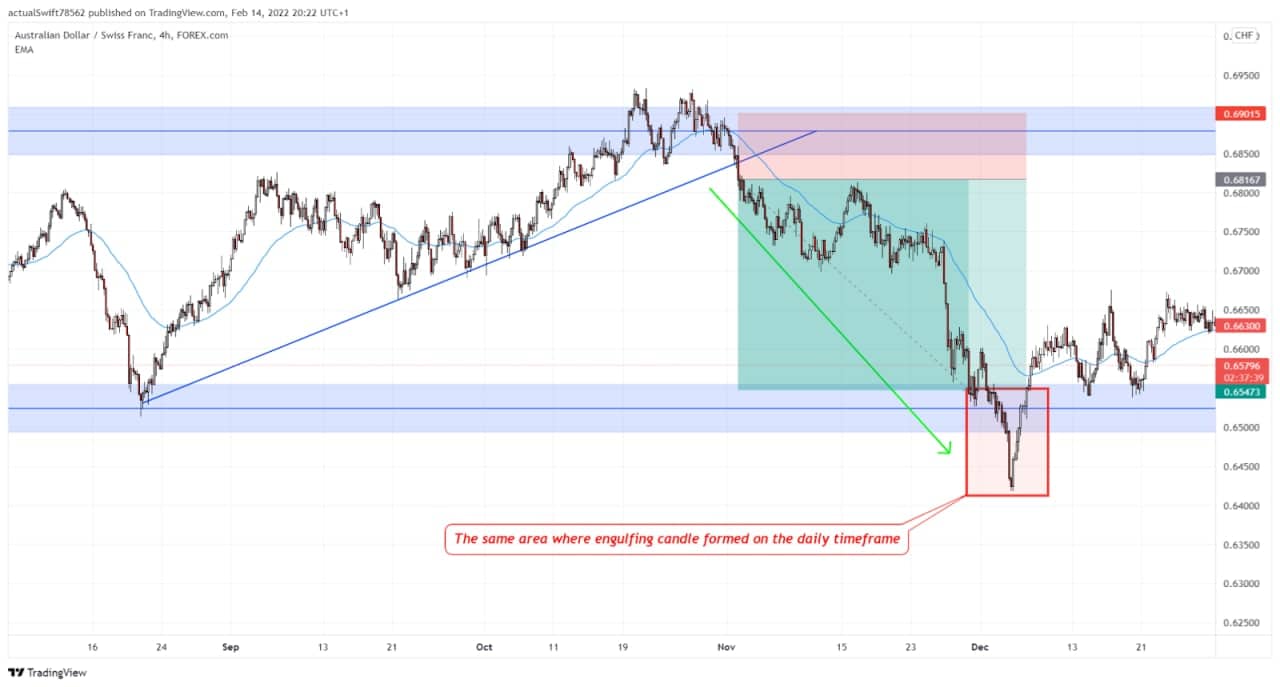
Note: We use a combination of both the 4h and daily time frame when looking to exit a trade.
Sometimes the price makes a higher high on the 4h timeframe, but on the daily it’s still bearish.
That helps us buffer out the trades where the price might just make a slightly bigger pullback and continue in the trade direction.